

The world is transforming at a pace unlike any before, with 2026 fast approaching and new challenges emerging daily. Navigating this rapid evolution requires more than just adapting; it calls for actively shaping our future. This guide offers a blueprint for individuals, organizations, and communities to take visionary, practical steps that will define a brighter tomorrow. We will explore global trends, unlock innovation, advance sustainability, empower communities, and cultivate future-ready skills. The opportunities ahead are vast, and by acting strategically today, you can be part of the movement driving lasting change for generations to come.
Understanding the Forces Shaping Our Future
The world is entering a period of rapid transformation. To be proactive in shaping our future, it is vital to understand the fundamental forces at play. From technological leaps to shifting cultural values, these interconnected trends will define the opportunities and challenges of 2026 and beyond.

Global Trends and Megashifts
Shaping our future is influenced by a tapestry of global trends. Digital transformation, demographic shifts, rapid urbanization, and climate change are at the forefront. By 2026, over 60% of the global population will reside in urban centers, according to the UN. Technological advances such as AI, automation, and the Internet of Things are revolutionizing industries and daily life.
Economic transitions are also underway, with the gig economy and remote work models reshaping how people engage with employment. Societal changes, including aging populations and increased migration, add new layers of complexity. Environmental pressures, from resource depletion to extreme weather, demand innovative responses. Initiatives like smart cities and green infrastructure projects exemplify how global megatrends are shaping our future in real time.
The Role of Policy and Governance
Effective policy and governance are essential for shaping our future. International agreements, such as the Paris Agreement and the UN Sustainable Development Goals, set a shared vision for global progress. Local governments drive innovation through participatory planning and inclusive policy-making, ensuring diverse voices are heard.
Regulatory frameworks adapt to keep pace with emerging technologies, balancing innovation and public interest. Examples include data privacy regulations and renewable energy incentives that support responsible growth. The agility of governance systems is critical, as shaping our future depends on their ability to respond swiftly to evolving challenges and opportunities.
Societal Values and Cultural Shifts
Changing societal values are at the core of shaping our future. Sustainability, equity, and inclusion have become guiding principles for both individuals and organizations. The demand for corporate social responsibility continues to rise, pushing companies to focus on environmental, social, and governance (ESG) commitments.
Purpose-driven organizations are gaining traction, particularly among younger generations who prioritize meaningful work and ethical business practices. Global connectivity accelerates cultural exchange, making diversity a strength. Youth climate activism and increased ESG reporting are tangible examples of these evolving values shaping our future.
The Power of Collective Action
Communities and networks play a significant role in shaping our future. Grassroots movements can spark policy changes and inspire innovation at every level. Campaigns like Fridays for Future and local food initiatives demonstrate the impact of collective efforts.
Collaboration between public, private, and civil society sectors is essential. Digital platforms make it easier than ever to mobilize support and coordinate action. When individuals unite for a common cause, their combined influence can drive systemic change, ensuring shaping our future is a shared responsibility.
Navigating Uncertainty and Complexity
The journey of shaping our future is filled with unpredictability. Scenario planning and foresight methodologies help organizations and communities anticipate a range of possible outcomes. Building resilience and adaptability is crucial to weathering unexpected disruptions.
Recent events, such as the COVID-19 pandemic, have highlighted the value of agile responses and proactive strategies. Businesses and governments that pivoted quickly managed to reduce impact and seize new opportunities. Shaping our future requires a mindset that embraces complexity, encourages learning, and prioritizes resilience at every level.
Visionary Step 1: Fostering Innovation and Technological Advancement
Innovation is the engine driving progress, and it is central to shaping our future. As we approach 2026, the capacity to innovate will define which individuals, organizations, and communities thrive. By fostering a culture that embraces new ideas and technologies, we lay the groundwork for long-term resilience and growth.

Building a Culture of Innovation
Organizations at the forefront of shaping our future share common traits. They encourage curiosity, reward experimentation, and make space for creative problem-solving. Leadership plays a crucial role by modeling an openness to new ideas and supporting calculated risks.
- Open innovation brings together talent from different sectors.
- Cross-sector collaboration accelerates solution development.
- Case studies like Google’s "20% time" and MIT Media Lab highlight the value of structured creativity.
According to PwC, 84% of executives see innovation as critical for growth. By intentionally designing environments that nurture innovation, we can ensure shaping our future is a collaborative and ongoing process.
Investing in Emerging Technologies
Technology investments are reshaping our future at an unprecedented pace. Artificial intelligence, blockchain, and quantum computing are transforming industries and opening new possibilities. The AI sector alone is projected to surpass $500 billion by 2026, according to IDC.
Public and private partnerships are fueling breakthroughs, from national AI strategies to tech incubators. In education, for example, leveraging technology in admissions is creating more accessible and efficient pathways for students, reflecting the tangible benefits of digital innovation.
Strategic investment ensures shaping our future is both inclusive and forward-looking.
Bridging the Digital Divide
Despite progress, digital inequality remains a challenge in shaping our future. Nearly 37% of the world’s population is still offline, according to ITU. Disparities in access and digital literacy can limit opportunities for millions.
Efforts to close the gap include community broadband programs and digital skills training. These initiatives are vital to ensure everyone benefits from shaping our future, not just those with early access to technology.
Inclusive innovation must prioritize equitable distribution of resources and knowledge.
Ethical and Responsible Innovation
As we innovate, ethical considerations are essential for shaping our future. Issues like algorithmic bias, data privacy, and transparency require robust frameworks and ongoing stakeholder engagement.
- AI ethics guidelines set standards for responsible development.
- Data stewardship models protect user rights and build trust.
- Regulation and self-governance complement each other.
By embedding ethical practices into every stage of innovation, we ensure shaping our future aligns with societal values and long-term wellbeing.
Scaling Solutions for Global Impact
Scaling innovation is crucial for maximizing the impact of shaping our future. Successful models often involve partnerships that cross public, private, and international boundaries. For instance, the rapid global distribution of COVID-19 vaccines illustrates how collaboration can overcome barriers.
Open-source platforms and shared knowledge accelerate adoption. Impact metrics in health, education, and sustainability help track progress and guide further scaling efforts.
Removing obstacles to scale is integral to shaping our future on a global scale.
Future-Proofing Organizations and Careers
Continuous learning is now a cornerstone of shaping our future. With the World Economic Forum estimating that 54% of employees will need significant reskilling by 2026, lifelong learning ecosystems are becoming essential.
- Corporate learning platforms provide flexible upskilling.
- Micro-credentialing validates new competencies.
- Adaptability is recognized as a core professional skill.
By investing in education and fostering adaptability, organizations and individuals can remain resilient and proactive in shaping our future.
Visionary Step 2: Advancing Sustainability and Environmental Stewardship
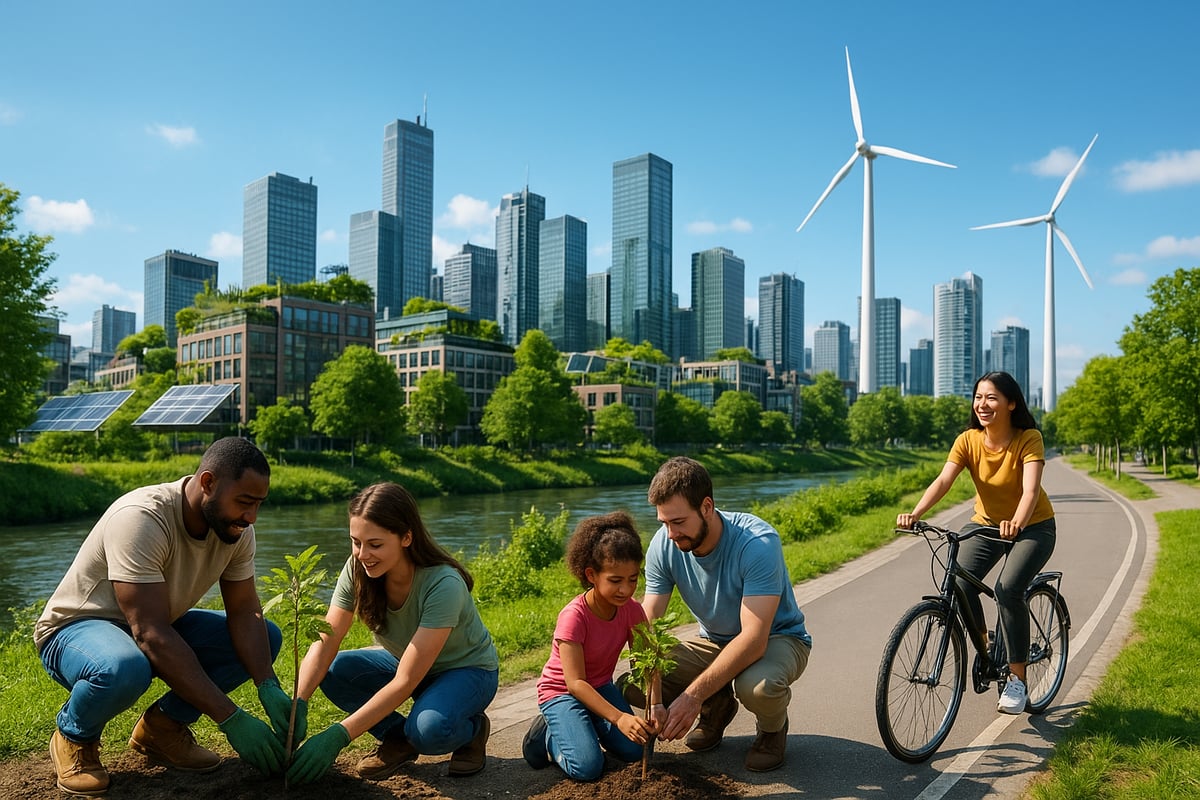
Building a more sustainable world is at the core of shaping our future. This vision requires bold action on strategy, energy, urban planning, resource management, waste, and resilience. Let’s explore the key steps individuals, organizations, and communities can take to make environmental stewardship a reality.
Integrating Sustainability into Strategy
Embedding sustainability into core strategy is essential for shaping our future. Organizations are adopting frameworks like ESG and the circular economy to align business with environmental and social goals. According to the UNGC, 90 percent of CEOs see sustainability as vital for long-term growth.
Examples include zero-waste initiatives, responsible sourcing, and building sustainable supply chains. These efforts create value, reduce risks, and enhance reputation. Long-term thinking ensures that business success and planetary health move forward together. By prioritizing sustainability, companies and communities lay the groundwork for a resilient and thriving future.
Accelerating the Energy Transition
The global push toward clean energy is a defining part of shaping our future. Renewables are projected to supply nearly 30 percent of global electricity by 2026, fueled by rapid advances in solar, wind, battery storage, and smart grids.
Policy drivers such as carbon pricing and clean energy mandates are accelerating adoption worldwide. For a deeper look at trends and the impact of AI on energy, see S&P Global Energy Trends 2026. Cities are investing in solar power, expanding wind farms, and exploring hydrogen solutions. These innovations make the energy transition not only possible but inevitable.
Promoting Sustainable Urban Development
Urbanization is reshaping our future, with 2.5 billion more people expected in cities by 2050. Smart city concepts and green infrastructure are crucial for managing this growth responsibly. Sustainable transportation, from electric vehicles to bike-sharing and reliable public transit, is transforming urban mobility.
Cities like Singapore and Paris are leading with green models and the “15-minute city” concept. Community involvement in planning ensures solutions are inclusive and responsive. By integrating nature into city design and promoting walkable neighborhoods, urban centers can thrive while reducing their ecological footprint.
Conserving Natural Resources and Biodiversity
Protecting our planet’s ecosystems is fundamental to shaping our future. Biodiversity loss is alarming, with one million species at risk according to IPBES. Ecosystem services such as clean water, pollination, and climate regulation are vital for survival.
Conservation strategies include protected areas, rewilding, and sustainable agriculture. The Amazon rainforest, urban green spaces, and indigenous stewardship are powerful examples. By valuing nature and supporting conservation, we ensure that natural resources and wildlife continue to support humanity for generations to come.
Reducing Waste and Emissions
The circular economy is at the heart of shaping our future by minimizing waste and emissions. Over two billion tons of waste are generated globally each year, highlighting the need for innovative solutions. Principles like reduce, reuse, and recycle guide both policy and consumer behavior.
Innovations include plastic bans, upcycling startups, and zero-waste stores. Governments and businesses are investing in advanced waste management and encouraging responsible consumption. Shifting toward circular models not only protects the environment but also creates economic opportunities for communities worldwide.
Climate Resilience and Adaptation
Adapting to climate change is a non-negotiable part of shaping our future. Recent extreme weather events have caused significant economic and social impacts, underscoring the need for resilience. Strategies include building flood-resistant cities, drought-tolerant crops, and robust disaster preparedness systems.
Community-based adaptation efforts are vital, drawing on local knowledge and participation. Insurance schemes and resilient infrastructure help protect vulnerable populations. By investing in adaptation, societies can not only withstand shocks but also emerge stronger and more united.
Visionary Step 3: Empowering Communities and Inclusive Growth
Empowering communities is essential to shaping our future, as inclusive growth creates opportunities for all. Societies thrive when every individual has the chance to participate, contribute, and benefit. Let us explore how targeted action in key areas can unlock collective potential and drive meaningful change.

Bridging Socioeconomic Gaps
Addressing inequality is a vital step in shaping our future. The top 10 percent of the global population holds 52 percent of total income, which highlights the urgency of closing socioeconomic gaps. Targeted interventions, including scholarships, microfinance, and universal healthcare, help remove barriers for underserved groups.
Programs like conditional cash transfers and community health workers can directly improve access to education and healthcare. Inclusive policies that prioritize marginalized communities are fundamental. By promoting equal opportunities, we ensure that shaping our future is a shared journey, not just a privilege for a few.
Fostering Civic Engagement and Participation
A thriving society depends on active citizenship and broad participation. Civic engagement empowers individuals to influence decisions that affect their lives, which is critical for shaping our future. Digital platforms now make it easier for people to take part in participatory budgeting and online petitions, giving everyone a voice.
Involving youth and marginalized groups leads to more representative outcomes. Transparency and accountability are also strengthened through open dialogue and data sharing. When communities are engaged, shaping our future becomes a collaborative, democratic process that reflects diverse needs and aspirations.
Building Resilient Local Economies
Local economies are the backbone of sustainable growth. Small and medium enterprises (SMEs) account for 90 percent of businesses globally, showing their importance in shaping our future. Supporting local entrepreneurship, investing in community funds, and encouraging local sourcing creates jobs and builds resilience.
Farmers’ cooperatives and maker spaces offer practical examples of how communities can innovate and adapt. During crises, strong local economies help buffer shocks and ensure continuity. Focusing on local strength is a cornerstone of shaping our future with stability and shared prosperity.
Enhancing Education and Lifelong Learning
Education is central to inclusive growth and a powerful driver for shaping our future. Yet, 244 million children remain out of school, limiting global potential. Innovative models such as blended learning, online education, and vocational training expand access and flexibility.
Initiatives like Khan Academy and community learning centers bring quality education to more people, regardless of location or background. Lifelong learning opportunities empower individuals to adapt and thrive in a changing world. By investing in education, we lay a strong foundation for shaping our future together.
Promoting Health and Wellbeing
Health is a cornerstone of community empowerment and is deeply connected to shaping our future. Significant disparities persist, from life expectancy gaps to unequal access to care. Integrated healthcare models, mental health support, and preventive programs address these challenges holistically.
Examples include telemedicine, community clinics, and workplace wellness initiatives. Addressing social determinants, such as housing and nutrition, further boosts wellbeing. Prioritizing health ensures that shaping our future is about more than economic growth, focusing on quality of life for all.
Strengthening Social Cohesion and Inclusion
Social cohesion is crucial for resilient, inclusive communities. Polarization and fragmentation can threaten progress, but initiatives that foster dialogue and understanding counter these trends. Interfaith councils, restorative justice programs, and the arts play a vital role in bringing people together.
Highlighting real-life impact stories and success journeys inspires collective action and demonstrates the power of unity. Sports, culture, and shared projects help build trust and a sense of purpose. By strengthening social bonds, we ensure that shaping our future is rooted in mutual respect and shared vision.
Visionary Step 4: Nurturing Future-Ready Skills and Mindsets
Preparing for 2026 and beyond requires a relentless focus on the skills and mindsets that will define success. As the world transforms, shaping our future means anticipating, adapting, and leading with purpose. This step breaks down the essential areas every individual and organization should prioritize to remain resilient and relevant.
Anticipating Future Workforce Needs
The global workforce is evolving as quickly as technology itself. New sectors such as the green economy, digital services, and healthcare are expanding, while traditional roles are being reshaped or replaced. According to the World Economic Forum, by 2025, 85 million jobs may be displaced, yet 97 million new roles could emerge. Skills like STEM expertise, digital literacy, and creativity are increasingly vital.
For those invested in shaping our future, adaptability and emotional intelligence will be non-negotiable. Participating in events like the 2026 Skills Summit can offer valuable insights into trends and workforce policy, helping individuals and organizations stay ahead.
Rethinking Education for the 21st Century
Education systems worldwide must pivot from traditional rote learning to dynamic, experience-based models. Countries like Finland and Singapore are leading with innovative reforms that emphasize project-based, interdisciplinary, and personalized approaches. Maker education and real-world internships connect classroom learning to practical outcomes.
Shaping our future requires that educators serve as facilitators, nurturing curiosity and encouraging students to take ownership of their learning journey. By aligning curricula with emerging industry needs, we empower learners to thrive in unpredictable environments and contribute meaningfully to society.
Fostering Critical Thinking and Problem-Solving
In a world where information is abundant, the ability to analyze, question, and create solutions is paramount. Studies consistently show that critical thinking correlates with employability and career advancement. Methods like Socratic questioning and design thinking foster these skills early on.
Debate clubs, hackathons, and innovation labs are practical examples of how shaping our future can be embedded into daily practice. Encouraging lifelong learning mindsets ensures that individuals remain agile and equipped to tackle new challenges as they arise.
Promoting Digital and Media Literacy
The digital age brings opportunities and threats. With 59% of people expressing concern about fake news, digital and media literacy are essential for informed decision-making. Digital citizenship, online safety, and fact-checking must be core components of education at every level.
Media literacy programs and digital safety curriculums help communities navigate the complexities of the online world. Shaping our future depends on empowering people to discern credible information, engage responsibly, and protect themselves and others in digital spaces.
Cultivating Leadership and Collaboration
Future leaders will need more than technical proficiency—they must demonstrate empathy, vision, and agility. Collaborative problem-solving and cross-cultural competence are critical in an interconnected world. Youth leadership programs and global exchanges build these qualities from an early age.
Mentorship and peer learning offer invaluable support. For those committed to shaping our future, building strong networks and investing in leadership development is a strategic imperative. Exploring career consultancy for the future can provide tailored pathways for individuals aiming to lead and inspire change.
Supporting Mental Agility and Wellbeing
Mental health is foundational to future-readiness. Rising rates of anxiety and burnout among youth and professionals underscore the need for resilience training, mindfulness, and self-care strategies. School wellness initiatives and workplace mental health programs are examples of proactive support.
Shaping our future means creating environments where mental agility is cultivated and wellbeing prioritized. By fostering supportive cultures, we enable individuals and teams to adapt, recover, and excel—no matter what challenges may come.
Visionary Step 5: Designing Pathways for Personal and Collective Impact
Creating real change requires more than intention—it demands clear pathways and strategic action. By focusing on both personal and collective goals, shaping our future becomes an attainable process. Let’s explore how vision, planning, networks, technology, and recognition converge to drive lasting impact.
Setting Vision-Driven Goals
A compelling vision is the first step in shaping our future. Setting vision-driven goals provides direction and motivation for both individuals and organizations. Frameworks like SMART and OKRs help structure objectives, making them specific and measurable.
For example, an organization might craft a mission statement aligning personal ambitions with broader societal aims. This alignment ensures every action contributes to shaping our future intentionally. Long-term thinking, paired with regular vision reviews, keeps teams and individuals on course.
Strategic Planning and Execution
Once goals are set, strategic planning transforms vision into reality. Effective planning involves scenario analysis, agile methodologies, and continuous evaluation. Tools like balanced scorecards help monitor progress and adjust course as needed.
Organizations that excel in shaping our future often embrace data-driven decisions and flexible strategies. For instance, scenario planning prepares teams for uncertainty, while regular reviews ensure adaptability. This disciplined approach fosters resilience and sustainable impact.
Building Supportive Networks and Partnerships
Collaboration accelerates progress on the journey of shaping our future. Building strong professional networks unlocks access to resources, mentorship, and diverse perspectives. Community alliances, professional associations, and innovation clusters amplify collective impact.
A practical step is building a strong LinkedIn profile to connect with like-minded professionals and organizations. These relationships create opportunities for knowledge exchange, joint ventures, and peer support, all essential for shaping our future together.
Leveraging Technology for Social Good
Technology is a powerful enabler when shaping our future. Digital platforms support advocacy, education, and community engagement at scale. Crowdfunding, for example, democratizes access to capital, empowering grassroots initiatives.
Open-source solutions and digital collaboration tools break down geographical barriers, making it easier to mobilize support for social causes. By harnessing technology, individuals and groups can amplify their impact, ensuring that shaping our future becomes a shared, inclusive endeavor.
Measuring and Celebrating Progress
Recognizing achievements keeps momentum high and motivates continued effort in shaping our future. Impact measurement frameworks such as SDG tracking and public reporting offer transparency and guide improvement.
Storytelling and community showcases help share success stories, inspiring others to join the movement. Celebrating milestones—whether through annual reports or local events—reinforces a culture of progress and encourages ongoing innovation in shaping our future.
As you reflect on the visionary steps we've outlined for shaping the future—whether it's fostering innovation, advancing sustainability, or empowering your own academic and professional journey—remember that having a clear, strategic plan is essential. If you're ready to align your goals with real opportunities and take the next step toward long-term success, I invite you to Learn How Admissions Consulting Works. Discover how personalized guidance can help you or your family navigate competitive academic pathways and build a foundation for meaningful impact in 2026 and beyond.