


Facing admissions interviews in 2026? You’re not alone. As colleges and universities worldwide increase their reliance on interviews, these conversations now play a critical role in shaping admission decisions.
This guide is designed to help you navigate the latest trends, formats, and expectations for admissions interviews. You’ll discover insider strategies, learn what interviewers are truly seeking, and gain tips to stand out at every stage.
Whether you’re preparing for your first interview or aiming to refine your approach, this article offers the expert-backed insights you need to excel.
The Evolving Role of Admissions Interviews in 2026
In recent years, admissions interviews have transformed from a supplementary component to a central pillar in university and college selection. As institutions seek to evaluate more than just academic records, admissions interviews now play a crucial role in shaping holistic applicant profiles. According to recent data, over 50% of competitive academic programs worldwide have made interviews a formal requirement, reflecting their growing influence on admissions outcomes. For more context on these changes and how they impact applicants, see the Latest college admissions trends 2025.
The landscape of admissions interviews is broader and more complex than ever before. There are several distinct types, each serving a unique purpose:
| Interview Type | Purpose | Example Programs |
|---|---|---|
| Evaluative | Directly influences admission | Ivy League, Oxbridge |
| Non-evaluative | Informational, not scored | Some liberal arts colleges |
| Assessment | Measures specific skills/aptitude | Medical, law, and creative programs |
| Selection | Ranks candidates for limited spots | Business schools, professional degrees |
| Recruitment | Encourages high-potential applicants | Specialized STEM or honors programs |
Understanding which format you will encounter is vital. Evaluative interviews are used to make or break your application, while non-evaluative sessions may simply gauge your interest or help you learn about the institution. Assessment and selection interviews are increasingly common in fields such as medicine, law, and the arts, where specific competencies must be demonstrated.
Why have admissions interviews become so pivotal? They allow committees to look beyond test scores and essays, probing for qualities like communication, motivation, and cultural fit. Admissions interviews offer a rare opportunity for applicants to express their passion, clarify their ambitions, and provide context for achievements or challenges not fully captured on paper. For example, top universities like Oxford, Cambridge, and select Ivy League schools now require interviews for most applicants. Medical and law programs, as well as creative fields, often use interviews to ensure candidates possess the necessary interpersonal and technical skills.
Another major shift in the admissions interviews process is the widespread adoption of hybrid and remote formats. The global pandemic accelerated the move to online interviews, and this trend has remained strong. In 2025 and 2026, it is expected that 70% or more of interviews will offer a virtual option, giving applicants greater flexibility regardless of location. Virtual interviews have their own challenges, such as managing technology and presenting oneself effectively on camera, but they also open new doors for international and non-traditional candidates. Applicants should always confirm the format in advance and prepare accordingly.
Admissions interviews now carry significant weight in final admission decisions. A strong interview can elevate a borderline application, while a weak performance may raise concerns that grades and essays cannot dispel. Increasingly, interviews are being used not only by undergraduate programs but also by graduate, professional, and creative disciplines. Specialized formats such as multiple mini interviews (MMIs) and portfolio reviews are on the rise, especially in medicine and the arts. As institutions continue to innovate in their selection processes, mastering admissions interviews is essential for standing out in a competitive applicant pool.
Admissions Interview Formats and Structures
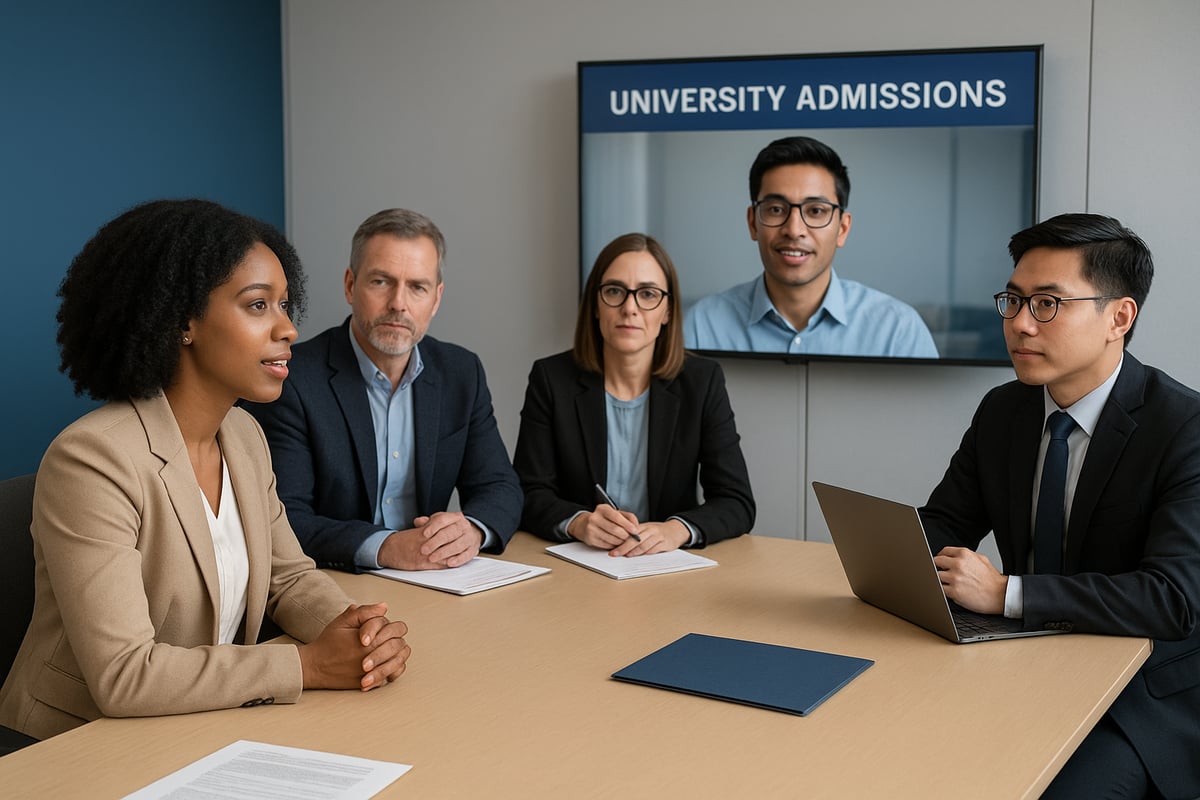
Admissions interviews in 2026 come in a variety of formats, each designed to assess applicants in unique ways. Understanding these structures is essential for effective preparation, as the right strategy depends on the format you will face. The landscape has shifted, with virtual options and innovative methods now common. Let’s explore the main formats you are likely to encounter.

Individual Interviews
Individual interviews remain the most prevalent format for admissions interviews. These can take place one-on-one or with a small panel of interviewers, and are used by top institutions such as Ivy League colleges, Cambridge, and Oxford, as well as many professional schools.
Applicants may be interviewed in person or virtually, with 70% of interviews in 2025-2026 expected to offer an online option. The trend toward hybrid and remote interviews has made it crucial to prepare for both settings. Structured interviews use standardized questions and scoring rubrics, while semi-structured interviews allow for more conversational flow.
A key tip: many universities share specific details about their admissions interviews in advance. Always confirm the format and prepare accordingly. For example, Conducting Effective Admissions Interviews provides insights into the value of structured interviews and what evaluators are seeking.
Performance can be affected by the format. Some applicants thrive in conversational settings, while others excel with clear structure. Practicing both styles is recommended to boost confidence.
Group Interviews and Discussions
Group interviews and discussions are gaining popularity in admissions interviews, particularly for creative, business, and healthcare programs. In this format, multiple applicants are assessed together, allowing interviewers to observe interaction, teamwork, and leadership.
Common scenarios include:
- Collaborative problem-solving tasks
- Debates on current topics
- Group presentations or case studies
Admissions interviews in group settings focus on communication, critical thinking, and the ability to listen and contribute constructively. Standing out requires balancing assertiveness with collaboration—being a leader without dominating the conversation.
Applicants should be mindful of group dynamics. Engage with others, support your peers, and demonstrate respect. These qualities are often as important as individual brilliance. Many schools provide guidance on how group interviews will be run, so review all available information in advance.
Multiple Mini Interviews (MMIs) and Specialized Formats
Multiple Mini Interviews (MMIs) have become a defining feature of admissions interviews for medical and health-related programs. This format consists of a series of short, focused stations, each testing a specific skill or scenario. Stations may assess ethical reasoning, communication, or problem-solving abilities.
How do MMIs differ from traditional admissions interviews? The pace is brisk, requiring adaptability. Each station is independent, so applicants must reset quickly and approach each scenario with fresh perspective. Data shows that MMIs are now used by 60% of medical programs in the UK and are increasing in popularity globally.
Specialized formats extend beyond MMIs. For example:
- Portfolio reviews for art and design programs
- Auditions for performing arts
- Technical assessments for STEM fields
Preparation for these admissions interviews should be targeted. Practice rapid transitions for MMIs, rehearse portfolio presentations, and refine technical skills as needed. Research the exact requirements for your program, as these formats are designed to reveal specific strengths.
In summary, understanding the structure of admissions interviews is a critical first step. Whether facing a solo meeting, group challenge, or specialized assessment, informed preparation will help you present your best self.
What Admissions Interviewers Are Really Looking For
Admissions interviews are more than just a conversation. They are a critical opportunity for applicants to demonstrate qualities that grades and test scores cannot capture. Understanding what interviewers truly seek is essential if you want to excel in admissions interviews and stand out in a competitive pool.

Core Evaluation Criteria
At the heart of most admissions interviews are a few universal criteria. Interviewers want to see if you demonstrate academic readiness and a genuine understanding of your chosen subject. They look for clear signs of motivation and authentic interest in both the course and the institution.
Critical thinking and analytical skills are also under the spotlight. Can you apply your knowledge to new situations or problems? Interviewers pay close attention to how you communicate — clarity, confidence, and active listening matter just as much as your answers. Professionalism and maturity, along with how well you fit the program’s culture, are also key. For example, Cambridge highlights the importance of potential, not just achievement.
If you want to refine your approach to these areas, consider exploring Essay and interview strategies to discover tips that work for both written and spoken assessments.
Personal Qualities and Soft Skills
Beyond academics, admissions interviews often probe for personal qualities that indicate long-term success. Curiosity, passion, and initiative are highly valued. Interviewers appreciate candidates who show resilience and adaptability, especially when faced with challenging or unexpected questions.
Teamwork and leadership are essential in group formats, while ethical awareness is especially important for professional programs. For instance, NHS interviews in the UK assess core values, and business school interviews emphasize leadership potential.
Demonstrating these soft skills in admissions interviews can set you apart. Share experiences that highlight your adaptability, ethical decision-making, or leadership in real-life contexts. These examples help interviewers see you as a well-rounded and mature candidate.
Red Flags and Common Pitfalls
Despite best intentions, many candidates fall into avoidable traps during admissions interviews. One of the most common pitfalls is giving one-word or superficial answers, which can signal a lack of engagement. Over-rehearsed or insincere responses are also easy for interviewers to spot.
Failing to clearly articulate your motivation for the course or university raises concerns about your commitment. Negative body language, poor etiquette, or an unprofessional appearance can undermine your credibility. Another frequent mistake is not answering the question asked or steering the conversation off-topic.
Consider this table summarizing red flags and best practices:
| Red Flag | Best Practice |
|---|---|
| Superficial answers | Provide thoughtful, detailed replies |
| Insincere responses | Be authentic and honest |
| Off-topic answers | Stay focused on the question |
| Negative body language | Use positive, open posture |
| Poor preparation | Practice with mock interviews |
According to competitor data, 25% of applicants report that nerves or lack of preparation led to underperformance in admissions interviews. Recognizing and avoiding these pitfalls is crucial for making a strong impression.
Step-by-Step Guide: How to Prepare for Admissions Interviews
Preparing for admissions interviews in 2026 requires a strategic, multi-phase approach. By breaking down your preparation into clear steps, you can build the confidence and skills needed to excel. This guide walks you through every stage, ensuring you present your best self to admissions committees.
Research and Understand the Interview Process
Start your admissions interviews preparation by thoroughly researching the interview requirements for each program. Review the official university or program websites for guidelines on formats, timing, and expectations. Determine whether your admissions interviews will be evaluative, non-evaluative, or a mix of both, as this influences how your responses are assessed.
Identify who will conduct your admissions interviews. Is it an admissions officer, faculty member, alumni, or a panel? Knowing this helps you tailor your approach and anticipate the style of questions. Confirm all logistics, such as the date, time, interview platform or location, expected duration, and any materials you need to bring.
Some programs require extra components like pre-interview assessments or portfolio submissions. Always ask for clarification if details are unclear, as understanding the process is key to avoiding surprises. Being proactive sets the tone for a smooth admissions interviews experience.
Academic and Personal Reflection
Reflecting on your academic journey and personal story is essential for admissions interviews. Review your application materials, including your personal statement and academic transcripts. Identify two or three strengths and experiences that align with the program’s values and mission.
Prepare to discuss your motivation for the course and the institution. Admissions interviews often include questions about your subject interest and long-term goals. Think about why you chose this path and how your experiences have influenced your decision.
Anticipate questions such as, “Why did you select this subject?” or “How have you demonstrated your commitment?” Be ready to discuss challenges you have faced, how you overcame them, and what you learned. Honest reflection during admissions interviews demonstrates maturity and self-awareness.
Practicing Interview Skills and Mock Interviews
Practice is vital for succeeding in admissions interviews. Work with teachers, counselors, or independent consultants to conduct mock interviews. Simulate real interview conditions by recording your sessions and reviewing them for constructive feedback.
Practice “thinking aloud,” especially for technical or scenario-based questions. This technique helps interviewers understand your reasoning process during admissions interviews. For group interviews, focus on collaboration and leadership skills in practice settings.
If your school offers mock interviews, make the most of this resource. Alternatively, seek out professional support, such as College admissions consulting guidance, for personalized coaching and expert feedback. Applicants who complete two or more mock admissions interviews often report significantly higher confidence and improved performance.
Preparing for Common and Challenging Questions
Admissions interviews frequently cover a range of question types, from motivation and subject knowledge to personal values and hypothetical scenarios. Review potential questions in each category and prepare specific, relevant examples to support your answers.
Practice responding to unexpected or difficult questions in a calm and thoughtful manner. Admissions interviews may include prompts like, “Describe a time you failed and what you learned,” or “How would you approach solving a complex problem?” Avoid generic or rehearsed answers; instead, focus on authenticity and depth.
Develop a strategy for handling follow-up questions and be prepared to think on your feet. The best way to build this skill is through repeated practice and honest self-assessment. This preparation will help you navigate even the toughest admissions interviews questions with confidence.
Logistics, Presentation, and Final Preparation
Attention to detail in logistics and presentation can make a strong impression during admissions interviews. Plan all travel, technology setup, and attire well in advance. Dress appropriately for the institution and setting, whether the interview is in person or virtual.
Arrive early or log in ahead of time to avoid last-minute stress. Bring all required documents, portfolios, or materials, and set up your environment to minimize distractions. Silence your devices and ensure a quiet, professional background for virtual admissions interviews.
Double-check your internet connection, camera, and microphone settings before the interview. A calm, organized approach to logistics allows you to focus fully on delivering your best performance during admissions interviews. Final preparation builds the confidence you need to stand out.
Mastering the Interview: Strategies to Stand Out
Mastering admissions interviews is about more than having the perfect answer. It is about presenting your best self, from the first greeting to the final thank you. Each stage offers an opportunity to differentiate yourself and leave a memorable impression on your interviewers.
Making a Strong First Impression
First impressions set the tone for admissions interviews. Begin with a confident greeting, whether it is a handshake in person or a poised presence online. Maintain good posture, steady eye contact, and attentive body language from the outset. Address interviewers by name and title if known, which demonstrates respect and preparation.
A strong introduction can create immediate rapport. Even virtually, a professional background, clear audio, and a genuine smile communicate readiness. Remember, the way you present yourself in the opening moments often shapes how your responses are received throughout the admissions interviews.
Communicating Effectively and Authentically
Effective communication is central to excelling in admissions interviews. Listen carefully to each question, avoiding interruptions. Structure your answers clearly: restate the question, provide specific examples, and reflect on your experience or learning. Interviewers appreciate concise, organized responses that directly address the prompt.
Show genuine enthusiasm for the subject and institution. Share personal stories that illustrate your passion and growth. Authenticity stands out more than rehearsed perfection. As technology evolves, some universities are experimenting with AI-driven interview platforms, like InterviewBot: AI in Admissions Interviews, highlighting the importance of natural, human communication skills in admissions interviews.
Handling Difficult Questions and Scenarios
Difficult questions are common in admissions interviews. Stay calm if you encounter a topic outside your expertise or an unexpected scenario. Take a moment to think aloud, demonstrating your reasoning and adaptability. If you do not know the answer, admit it honestly but express a willingness to learn.
For example, when asked a technical question you cannot answer, acknowledge your current limits and discuss how you would approach finding a solution. This mindset shows resilience and a growth-oriented attitude, qualities highly valued in admissions interviews.
Asking Insightful Questions
Admissions interviews are a two-way conversation. Prepare thoughtful questions to ask your interviewer, focusing on academic opportunities, research, or program culture. Avoid questions easily answered on the institution's website.
Examples include: "What mentorship opportunities are available for first-year students?" or "How does the department support interdisciplinary study?" Insightful questions demonstrate initiative, curiosity, and genuine interest, helping you stand out during admissions interviews.
Following Up Professionally
A professional follow-up can reinforce a positive impression after admissions interviews. Send a thank-you note within 24 hours, tailored to your interviewer’s preference—email or handwritten. Reference a topic discussed during the interview to personalize your message.
Restate your enthusiasm for the program and appreciation for their time. This simple gesture demonstrates maturity, attention to detail, and a sincere commitment to your application, adding a final touch to your admissions interviews experience.
Interview Preparation Support from Pathway2Career
Preparing for admissions interviews can be daunting, but expert support makes all the difference. Pathway2Career specializes in personalized guidance for college, graduate, and professional program applicants, ensuring you are fully equipped for every stage of the admissions interviews process.

Benefit from services such as mock interviews, tailored question practice, and expert storytelling coaching. Their approach adapts to each individual's goals and target programs, with a strong commitment to cultural awareness and equity.
Pathway2Career boasts a 95% client acceptance rate into top-choice schools. If you are targeting graduate programs, explore their Graduate admissions interview support for specialized preparation.
Ready to build confidence and interview excellence? Schedule a consultation to start your journey toward admissions success.
As you prepare to master your admissions interview in 2026, remember that a strong strategy and authentic self-presentation can set you apart from the competition. We’ve explored how understanding the interview process, reflecting on your strengths, and practicing effectively can elevate your confidence and performance. If you want dedicated, expert support tailored to your goals and target programs, I encourage you to take the next step. You can gain valuable insights and personalized advice on how admissions consulting can transform your journey by visiting Learn How Admissions Consulting Works.